Calaveras County, California, arrest warrants search allows individuals to check for active warrants, pending criminal charges, or outstanding legal actions against a person. This process is critical for legal compliance, background verification, and personal safety. Warrants in California can be issued for various reasons, including failure to appear in court, unpaid fines, or suspected criminal activity. Knowing how to perform a proper search ensures accurate results and helps avoid unintended legal consequences. Calaveras County maintains official records through its Sheriff’s Office and Superior Court, both of which provide structured methods for accessing warrant-related data. These records are public under California law, but they must be retrieved through authorized channels to ensure authenticity and legal validity.
Performing a Calaveras County arrest warrants search or a San Diego County arrest warrants search requires knowing which agencies manage different types of records. The Sheriff’s Office handles active warrants and jail bookings, while the Superior Court manages case filings and bench warrants. Each entity uses specific databases and search tools that require precise input methods. For example, the Sheriff’s Office online inmate lookup tool requires a full name or booking number. The court’s case search portal uses docket numbers or party names. Understanding these systems prevents wasted time and ensures reliable outcomes. This guide provides exact steps, field names, and expected results for each search method available in Calaveras County and San Diego County.
Official Calaveras County Warrant Search Tools
The Calaveras County Sheriff’s Office and Superior Court offer online tools for searching arrest warrants and related records. These platforms are maintained by government agencies and provide legally recognized data. Using these tools ensures accuracy and compliance with California public records laws. Each system has specific input requirements and returns structured data about individuals, charges, and warrant status. Below are the primary tools available for conducting a Calaveras County arrest warrants search.
Official Calaveras County Warrant Search Tools
The Calaveras County Sheriff’s Office and Superior Court provide public access to inmate and case-related records. These systems are maintained by government agencies and updated regularly to reflect custody status and court activity.
To access official services, use the main government website:
- https://www.calaverascounty.gov/
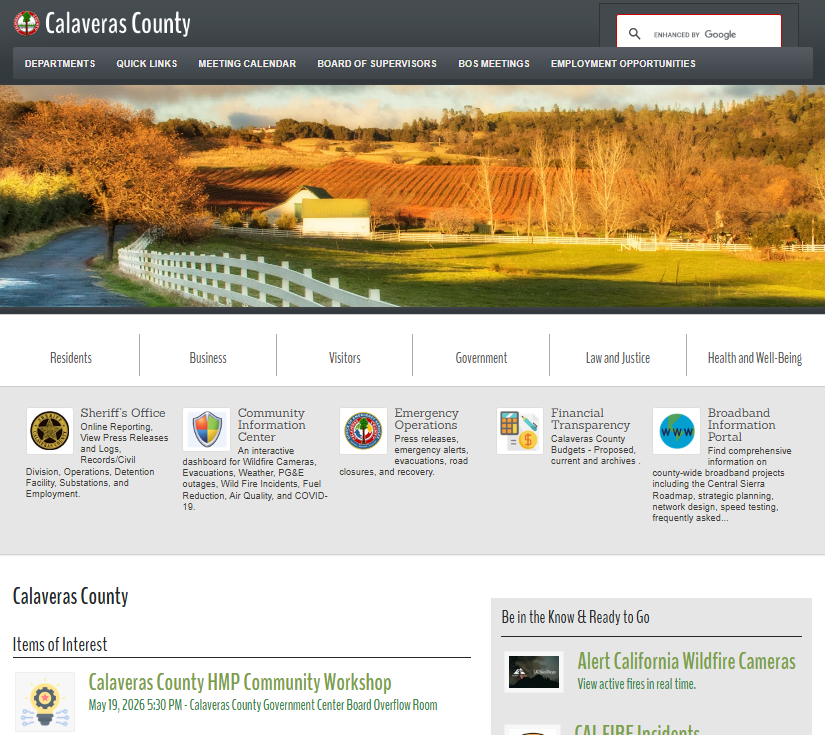
- From there, navigate to:
Sheriff-Coroner → Inmate Information or Jail Services
Superior Court → Case Information / Case Search
Sheriff’s Office Inmate and Booking Search
The Calaveras County Sheriff’s Office provides an inmate lookup system https://www.calaverascounty.gov/ for checking current jail bookings and recent arrests.
Steps:
- Enter the person’s full legal name in the inmate search field
- Leave the booking number blank unless available
- Click Search
The system may display:
- Inmate name
- Booking date
- Charges
- Bail amount
- Housing location
- Release status
If no results appear, the person is not currently in custody. This does not confirm whether a warrant exists—it only reflects jail status.
Superior Court Case Search Portal
The Calaveras County Superior Court provides access to criminal case records https://www.calaverascounty.gov/, including cases that may involve active bench warrants.
Steps:
- Select Criminal Case Search
- Enter the defendant’s full name
- Choose case type
- Click Search
Results may include:
- Case number
- Filing date
- Charges
- Court status
- Warrant indicators (e.g., bench warrant issued)
- Next court date
If a warrant exists, it will typically appear in the case status or docket history.
California Department of Justice RAP Sheet Request
For a complete criminal history, including warrants, individuals can request a Record of Arrest and Prosecution (RAP) sheet from the California DOJ. This report includes all arrests, charges, and warrant history statewide, not just in Calaveras County.
- Complete form BCII 8016 at https://oag.ca.gov/fingerprints/forms

- Submit with fingerprints at a Live Scan location
- Processing takes 4–6 weeks
The RAP sheet lists all arrests, charges, dispositions, and any outstanding warrants. It is the most comprehensive record available to the public and is often used for employment or legal verification.
Types of Warrants in Calaveras County
Warrants in Calaveras County fall into distinct categories based on who issues them and why. Each type has different legal implications and search methods. Knowing the difference helps target the correct database and interpret results accurately.
Bench Warrants
Bench warrants are issued by judges when someone fails to appear in court, pay a fine, or comply with a court order. These are common in misdemeanor and traffic cases. They do not require a police investigation and can be issued quickly.
- Issued by: Calaveras County Superior Court judges
- Common causes: Missed court date, unpaid traffic tickets, probation violation
- Search method: Use the court case search portal with the person’s name
- Status indicators: “Bench Warrant Issued,” “Warrant Active,” or “Warrant Recalled”
Bench warrants remain active until the individual appears in court or pays the required fine. They can lead to arrest at any time, including during traffic stops or public interactions with law enforcement.
Arrest Warrants
Arrest warrants are issued by judges based on probable cause that a person committed a crime. These are typically requested by law enforcement after an investigation. They apply to both felony and misdemeanor offenses.
- Issued after: Police submit an affidavit to a judge
- Required evidence: Probable cause, witness statements, or physical evidence
- Validity: Remains active until served or recalled
- Search limitation: Not all felony warrants appear in public databases
Felony warrants are often listed in statewide databases, while misdemeanor warrants may only appear in local court records. The Sheriff’s Office may confirm an active warrant over the phone, but will not disclose details to third parties without authorization.
Civil Warrants and Failure-to-Appear Orders
Civil warrants are less common but can be issued in cases involving child support, small claims, or contempt of court. These are not criminal charges but can result in arrest if ignored.
- Examples: Failure to pay child support, ignoring a subpoena
- Issued by: Civil Division of the Superior Court
- Enforcement: The Sheriff’s Office may arrest the individual
- Search method: Use the court’s civil case search with the party name
These warrants are often overlooked but carry real legal risk. Checking civil dockets is essential for a complete warrant search.
How to Perform a Manual Warrant Inquiry
When online tools are insufficient, individuals can contact Calaveras County agencies directly. This method is slower but may provide information not available online. It is especially useful for verifying warrant status or requesting official documentation.
Calling the Sheriff’s Records Division
The Sheriff’s Office Records Division maintains arrest logs, booking records, and warrant service reports. They can confirm if a warrant is active but may limit disclosure based on privacy laws.
- Phone number: (209) 754-6694
- Hours: Monday to Friday, 8:00 AM to 5:00 PM
- Required information: Full name, date of birth, and reason for inquiry
- Response time: Immediate for basic confirmation
Staff will ask for identifying details and may verify your identity before confirming a warrant. They will not provide charge details or arrest instructions over the phone. If a warrant exists, they may advise contacting an attorney.
Visiting the Superior Court Clerk’s Office
The Clerk’s Office at the Calaveras County Superior Court allows in-person searches of criminal and civil dockets. Staff can assist with locating case files and warrant records.
- Location: 891 Mountain Ranch Road, San Andreas, CA 95249
- Hours: 8:30 AM to 3:00 PM, Monday to Friday
- Bring: Valid photo ID and the subject’s full name
- Process: Request a docket search at the public counter
Clerks will retrieve case files and highlight any active warrants. You may receive a printed copy of the docket for a small fee. This is the most authoritative method for verifying court-issued warrants.
Requesting Records by Mail
For remote inquiries, individuals can submit a written request to the Sheriff’s Office or Court Clerk. This method is slower but useful for formal documentation.
- Include: Full name, date of birth, return address, and notarized signature
- Mail to: Calaveras County Sheriff’s Office, 891 Mountain Ranch Road, San Andreas, CA 95249
- Processing time: 10 to 14 business days
- Fee: $15 for records search, payable by check or money order
Mail requests must include a self-addressed stamped envelope. The office will send a written response confirming or denying the existence of a warrant.
Calaveras County Arrest Records Lookup
Arrest records in Calaveras County include details about when and why someone was taken into custody. These records are separate from warrants but often related. They are maintained by the Sheriff’s Office and may appear in public logs.
Public Arrest Logs and Booking Reports
The Sheriff’s Office publishes daily arrest logs listing individuals booked into the county jail. These logs include names, charges, and booking times. They are updated every 24 hours and available online.
- Access: https://www.calaverascounty.gov/
- Data shown: Name, Age, Charge, Booking Date, Bail Amount
- Retention: Logs are kept for 90 days online
- Limitations: Does not show warrants for non-booked individuals
These logs help track recent arrests, but do not indicate if a warrant was the cause. A person may be arrested without a warrant if caught in the act of a crime.
Mugshot Availability and Release Policies
Mugshots are taken during booking and may be released to the public. Calaveras County follows California law allowing mugshot disclosure unless restricted by court order.
- Mugshots appear on the Sheriff’s website and third-party sites
- Removal request: Submit a written request to the Sheriff’s Office
- Legal basis: California Government Code § 6254(f)
- Timeframe: Removal may take 30 days
Once released, mugshots can spread rapidly online. The Sheriff’s Office does not control third-party sites but may request removal on your behalf.
Expungement and Record Sealing
Individuals with arrest records or warrants may qualify to have their records sealed or expunged. This process removes or limits public access to the record.
- Eligibility: Dismissed charges, completed probation, or old convictions
- Process: File a petition with the Superior Court
- Fee: $120 filing fee, waivers available
- Effect: Limits employer and public access
Expungement does not erase the record entirely but changes its legal status. It can improve employment and housing opportunities.
Legal Rights and Risks in Warrant Searches
Searching for warrants involves legal rights and potential risks. Individuals have the right to know if a warrant exists, but must avoid actions that could lead to arrest or privacy violations.
Right to Know About Your Own Warrant
California law allows individuals to inquire about their own criminal records and warrants. This is protected under the California Public Records Act and the Right to Privacy.
- You can: Request your own RAP sheet, check court dockets, call the Sheriff
- You cannot: Demand records about others without authorization
- Risk: Appearing in person may result in arrest if a warrant exists
- Safer option: Use online tools or mail requests
Law enforcement must confirm your identity before disclosing warrant information. They may ask for ID or fingerprints.
Risks of In-Person Inquiries
Visiting a Sheriff’s Office or court to check for a warrant can be dangerous if one exists. Officers may arrest you on the spot.
- Best practice: Call first or use online tools
- If you must go: Bring an attorney or trusted person
- Know the signs: Officers may detain you for questioning
- Legal protection: You have the right to remain silent and request a lawyer
Always assume a warrant could be active. Avoid self-incrimination by not discussing the case with officers without legal counsel.
Third-Party Search Services
Many websites claim to offer warrant searches for a fee. Most are unreliable or outdated. Only government sources provide accurate, current data.
- Red flags: Upfront fees, no physical address, fake testimonials
- Safe alternatives: Use official .gov websites
- Cost: Most government searches are free or low-cost
- Privacy: Avoid sites that sell your data
Stick to Calaveras County’s official sites to avoid scams and ensure data accuracy.
| Agency | Address | Phone | Hours |
| Calaveras County Sheriff’s Office | 891 Mountain Ranch Road, San Andreas, CA 95249 | (209) 754-6500 | Mon–Fri: 8:00 AM – 5:00 PM |
| Superior Court Clerk’s Office | 891 Mountain Ranch Road, San Andreas, CA 95249 | (209) 754-9800 | Mon–Fri: 8:30 AM – 3:00 PM |
| District Attorney’s Office | 891 Mountain Ranch Road, San Andreas, CA 95249 | (209) 754-6565 | Mon–Fri: 8:00 AM – 5:00 PM |
(FAQs) About Calaveras County, California Arrest Warrants Search
Many people search for warrant information in Calaveras County to confirm their legal status, clear old court issues, or avoid unexpected arrests. Warrants may remain active for years and can affect employment, travel, background checks, and future court proceedings. The questions below explain how warrant searches work, what happens after a warrant is issued, and the steps individuals can take to resolve the matter legally and safely.
How do I check if I have an active warrant in Calaveras County?
To check for an active warrant in Calaveras County, start by using the Superior Court’s online case search portal. Enter your full name in the “Party Name” field and select “Criminal” as the case type. The system will display any cases where a bench warrant has been issued. You can also call the Sheriff’s Records Division at (209) 754-6694 during business hours. Provide your full name and date of birth for verification. If a warrant exists, they will confirm its status but may not disclose details over the phone. For a complete record, request a RAP sheet from the California DOJ using form BCII 8016. This report includes all arrests and warrants statewide. Avoid visiting government offices in person if you suspect a warrant, as you may be arrested immediately. Always consult an attorney if a warrant is confirmed.
Can someone else search for my warrant status in Calaveras County?
Yes, but with limitations. Third parties can use public databases like the court’s case search or the Sheriff’s inmate lookup to check for records. However, they must know your full legal name and may not access sensitive details. The Sheriff’s Office will not confirm warrant information to unauthorized individuals over the phone. If someone requests records by mail, they must include a notarized authorization from you. The California Public Records Act allows access to criminal case files, but personal identifiers like Social Security numbers are redacted. Employers and landlords can request background checks through approved agencies, but these require your written consent. Always verify who is conducting the search and why. Unauthorized access to your records may violate privacy laws.
What happens if I have an outstanding warrant in Calaveras County?
If you have an outstanding warrant, you are subject to arrest at any time. Law enforcement can detain you during a traffic stop, at home, or in public. Bench warrants often result from missed court dates or unpaid fines. Felony warrants may lead to immediate custody and bail hearings. The first step is to contact a criminal defense attorney. They can verify the warrant, negotiate a surrender, or request a recall. Do not ignore the warrant—it will not expire and may lead to additional charges. You may be eligible for a court appearance to resolve the issue. If it’s a minor offense, the judge may recall the warrant after payment or compliance. For serious charges, legal representation is essential. Surrendering voluntarily can improve your standing in court.
How long do arrest warrants stay active in Calaveras County?
Arrest warrants in Calaveras County do not have an expiration date. They remain active until served, recalled by a judge, or the case is dismissed. Bench warrants for misdemeanors may be recalled if fines are paid or court appearances are made. Felony warrants can remain open for years, especially if the suspect is not located. The statute of limitations applies to the underlying crime, not the warrant itself. For example, a misdemeanor may have a one-year limit, but the warrant stays active until arrest. Warrants are entered into state and federal databases, making them accessible to law enforcement nationwide. Even if you move out of the county, the warrant can lead to arrest. The only way to clear a warrant is through court action, arrest, and processing.
Can I clear a warrant without going to jail in Calaveras County?
Yes, in some cases. If the warrant is for a minor offense like a traffic violation or missed court date, you may be able to resolve it without jail time. Contact the court clerk or your attorney to request a new court date or payment plan. Judges often recall bench warrants if fines are paid or compliance is shown. For misdemeanor warrants, you may be released on your own recognizance after appearing in court. Felony warrants usually require bail or a custody hearing. Voluntary surrender with legal counsel can reduce penalties. The court considers factors like criminal history, offense severity, and community ties. Always appear with an attorney to present your case effectively. Avoid ignoring the warrant, as it increases the risk of arrest and harsher penalties.